


Google Integration
The Google Integration adds user sign-in with Google accounts to your app over OpenID Connect (OIDC). Reflex Build wires the app with the Reflex Enterprise auth plugin, so pages, events, and state can require a signed-in user, and the login button reads "Continue with Google".
This card replaces the legacy Google Auth integration. Projects that already have a Google Auth connection keep it.
Step 1: Copy Your Redirect URIs
- In Reflex Build, open the Integrations tab and select the Google card.
- Click Add connection. The form lists the sign-in redirect URIs to register with Google: the app's preview URL followed by
/callback, plus one for each address the app is deployed to.
Keep the form open; you will fill it in after the next step.
Step 2: Create a Google OAuth Client
- In the Google Cloud Console, open Google Auth Platform. If you have not configured it for this project yet, click Get started and complete the app setup first.
- Go to Clients and click Create client.
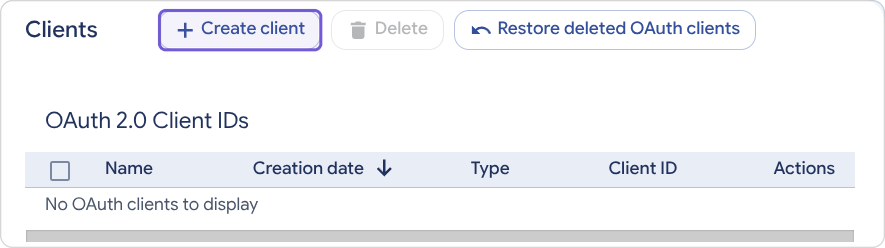
- Choose Web application as the application type and give it a name.
- Under Authorized redirect URIs, add each redirect URI from Step 1.
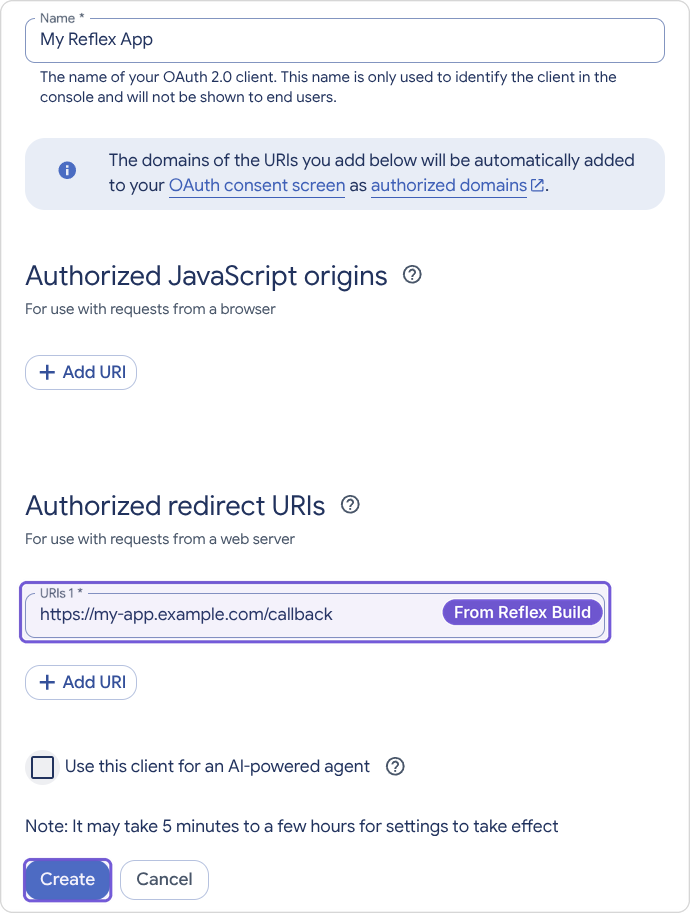
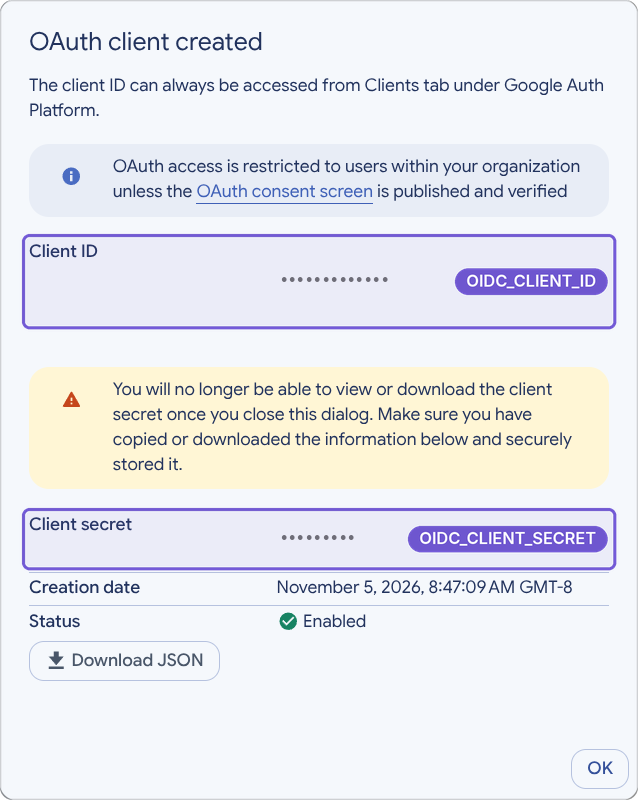
- Click Create, then copy the Client ID and Client secret. Store the secret somewhere safe: Google only shows it in full when the client is created.
Step 3: Connect in Reflex Build
Fill in the form you opened in Step 1:
- OIDC_ISSUER_URI: prefilled with
https://accounts.google.com. Google's issuer is fixed, so leave it as it is. - OIDC_CLIENT_ID: the client ID from Step 2.
- OIDC_CLIENT_SECRET: the client secret from Step 2.
- OIDC_EXTRA_SCOPES (optional): extra scopes to request, separated by spaces. Google has no
offline_accessorgroupsscope, so leave this blank unless you need other Google OAuth scopes.
Click Connect. Reflex Build fetches the issuer's discovery document (/.well-known/openid-configuration) and refuses an issuer URL that does not serve one.
Notes
- Register every redirect URI exactly: a missing or mistyped URI fails at login with
redirect_uri_mismatch. The preview URL changes when the sandbox is recreated, so register the new one if sign-in stops working. After you deploy, also registerhttps://<your-app-domain>/callback. - Scopes: the application must be allowed to request the
openid,profile, andemailscopes. - Session length: signed-in sessions last up to 7 days, then users sign in again, whatever your provider's token settings.